
- X
- Tumblr
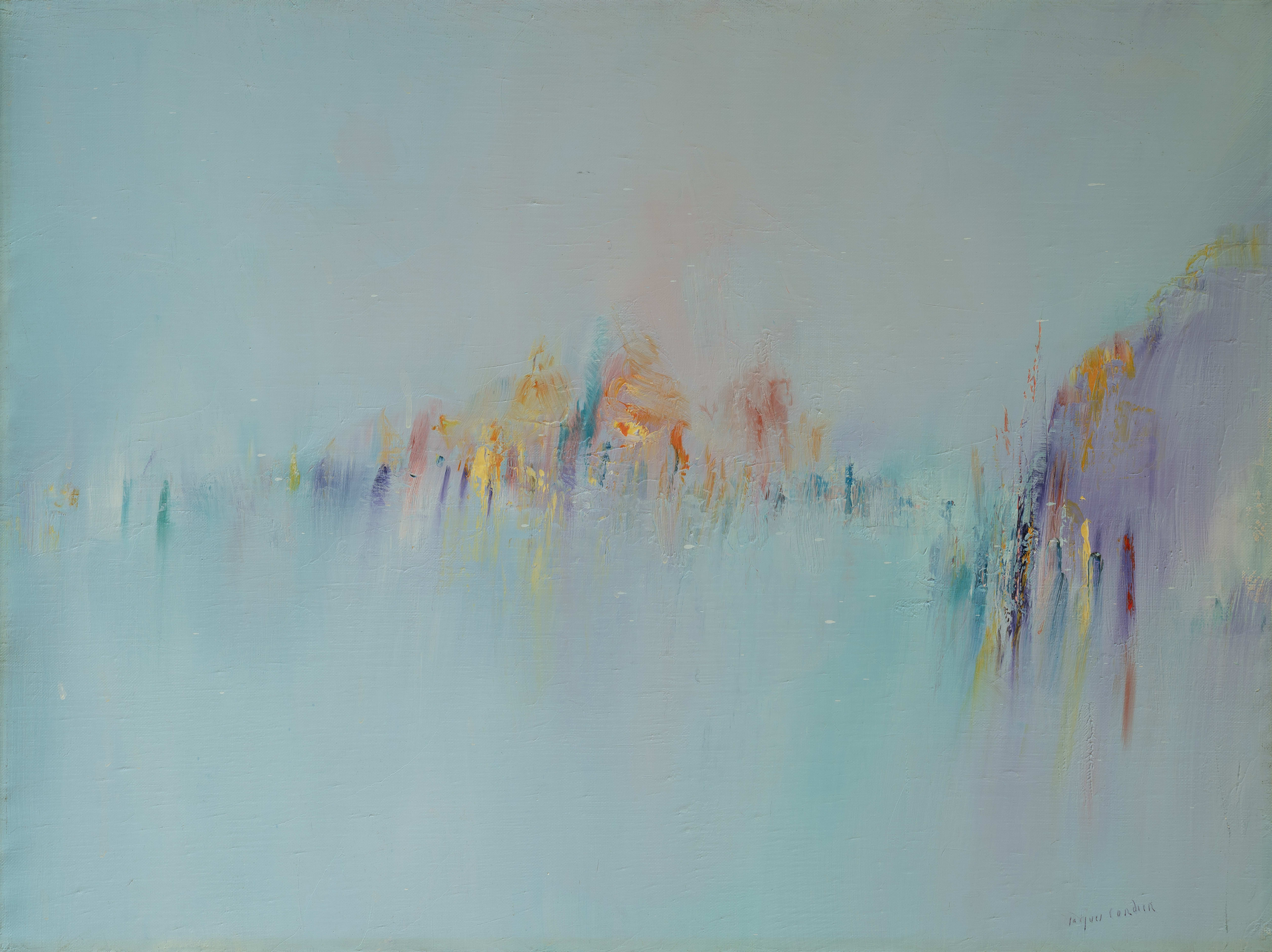 Jacques Cordier, Palazzo Franchetti, Venice
The final phase of the French artist’s painting on display in the spaces of the Morandiana Library at Palazzo Franchetti.
There are cities that artists try to depict. And then there is Venice, which instead forces painters to change the way they look. A city that does not simply allow itself to be painted, but compels those who observe it to rethink their way of seeing. Water reflects, multiplies, dissolves. Light does not merely illuminate: it transforms. It is within this fragile balance between form and dissolution that the exhibition “Jacques Cordier - Venise” takes shape, set up in the spaces of the Morandiana Library at Palazzo Franchetti, in the heart of Venice.
Promoted by the Calarota Foundation and curated by Marie-Isabelle Pinet, the exhibition - open until April 10 - brings attention back to an intriguing and still relatively little-explored figure in postwar French painting: Jacques Cordier (Bois-Colombes, 1937 – Lyon, 1975).
Pinet’s curatorial project focuses on the final phase of the artist’s pictorial research, developed in the years immediately preceding his premature death, when his painting undergoes a decisive transformation. The exhibition examines the moment in which Cordier gradually abandons a more traditional vision of landscape in favor of an increasingly luminous, atmospheric style, sensitive to the movement of light.
The turning point has a precise date: 1971. During a stay in London, Cordier visits the Tate Gallery. Standing before the canvases of William Turner - the painter who more than any other had transformed light into matter - Cordier realizes that landscape can dissolve into atmosphere. It is a point of no return. Turner had pushed painting to the threshold where landscape dissolves into the vibration of light. For Cordier, that encounter becomes a silent catalyst: his painting changes rhythm, becomes lighter, and opens to a more fluid and luminous dimension.
It is at this moment that Venice enters the scene. Between 1971 and 1975, Cordier and his wife Simone stayed several times in the lagoon city. Venice becomes a kind of visual laboratory: a place in which to experiment with a painting capable of capturing not so much the form of things as their atmosphere. Following Marie-Isabelle Pinet’s curatorial approach, the exhibition mainly presents oil paintings on canvas created during these years. Observing them, one perceives a gradual transformation: the architectural forms remain recognizable, yet they seem to emerge from light rather than being constructed by drawing.